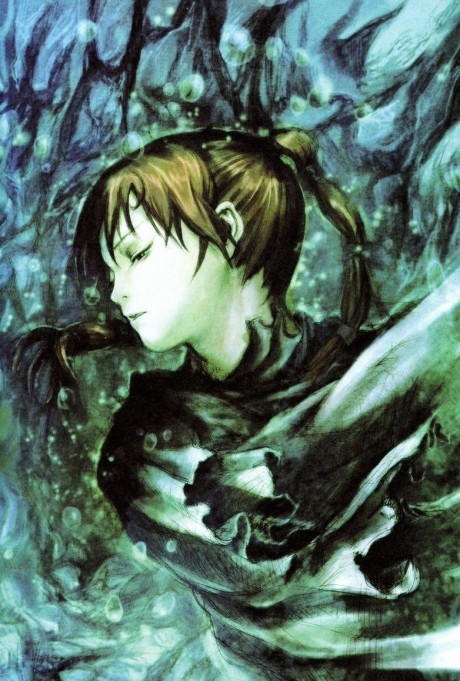
Texhnolyze is a 22-episode original anime from Madhouse (2003), set in a dying underground city called Lux, where a silent prize fighter is rebuilt with experimental prosthetic limbs. It is slow, bleak and sparing with dialogue, and it ends with no rescue. It is for adults who want atmosphere and ideas over plot payoffs. It is not based on a manga.
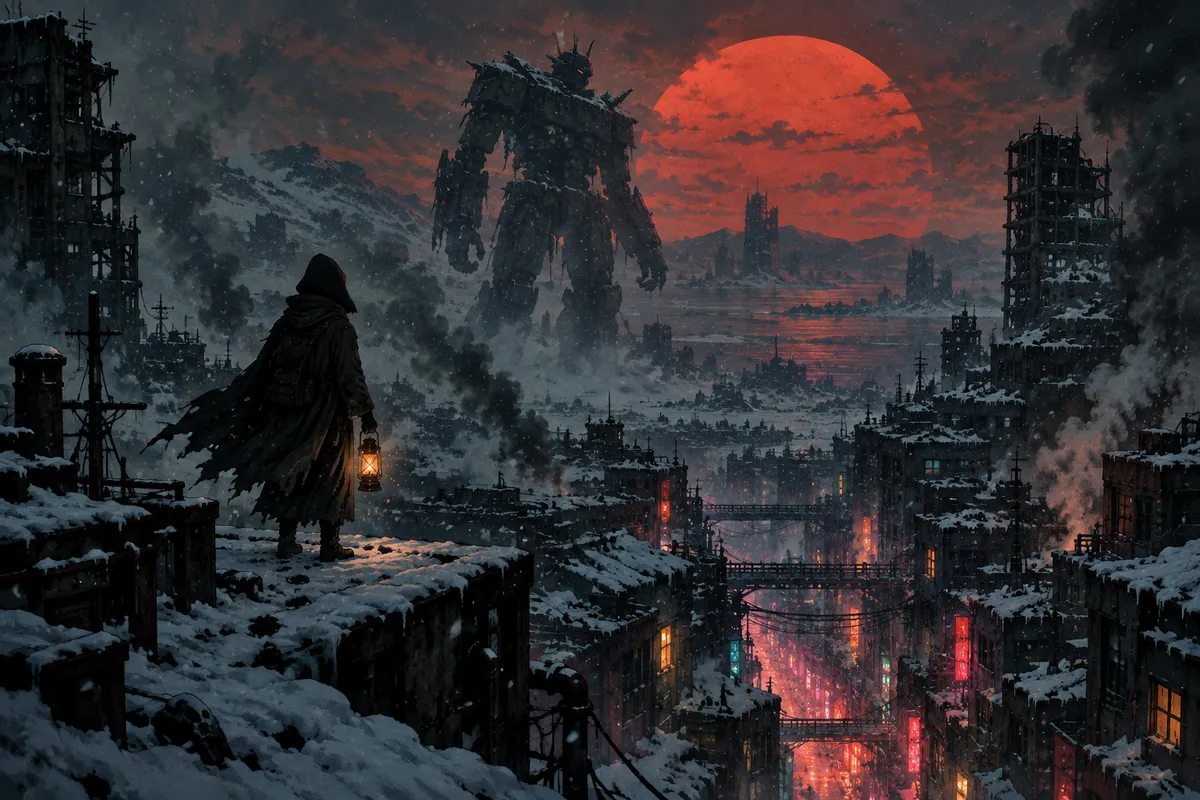
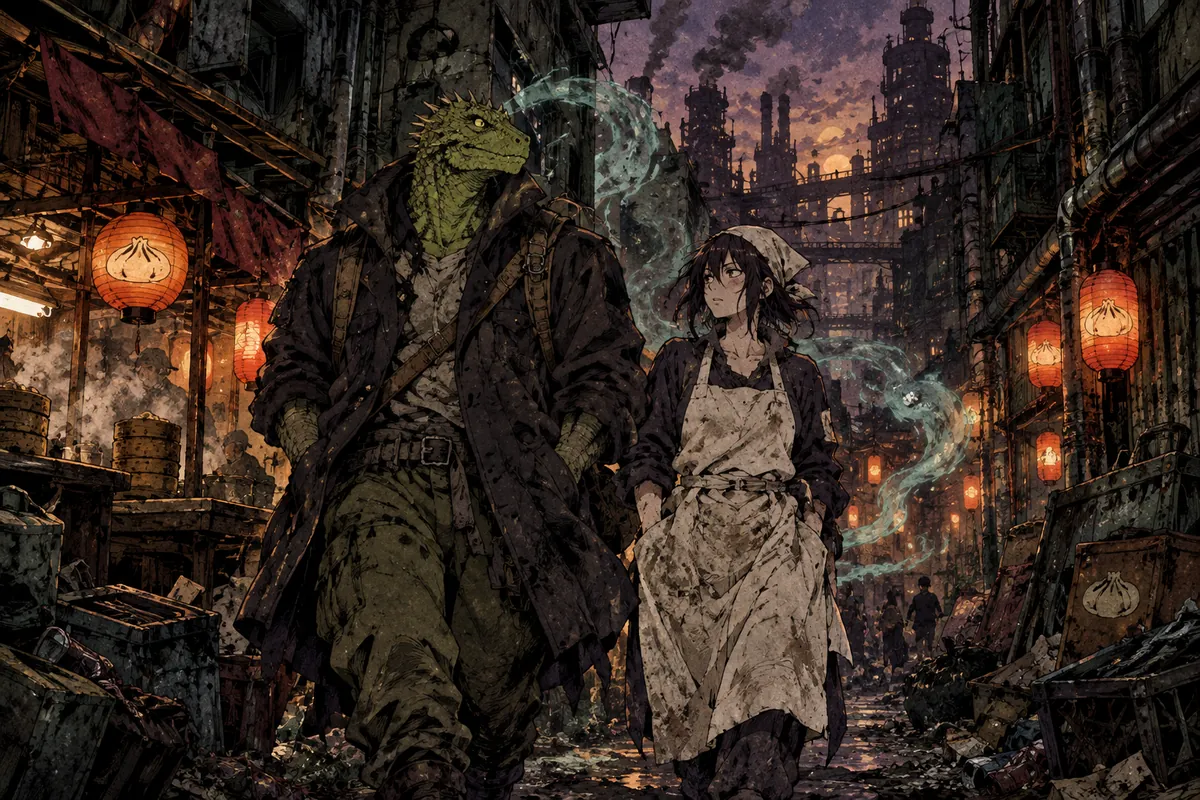
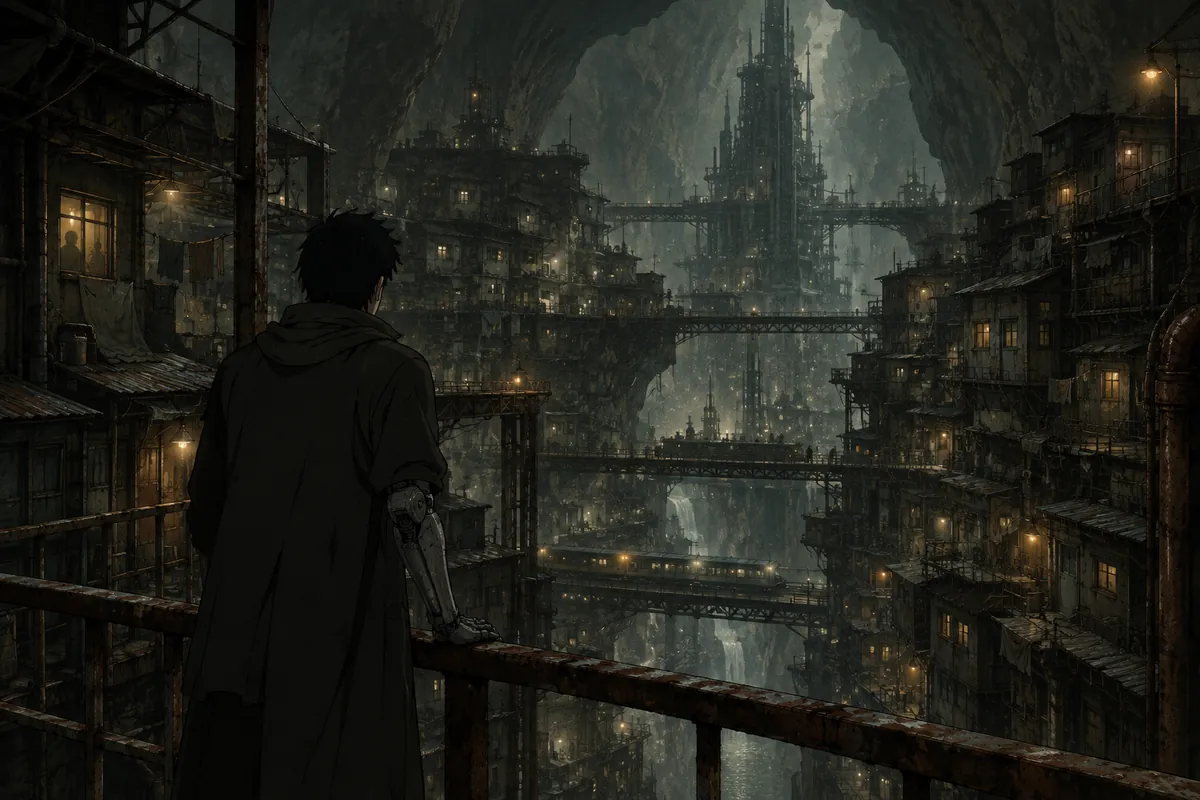
Image: Fan art (AI-generated)
What Texhnolyze is
Texhnolyze is a Japanese TV anime directed by Hiroshi Hamasaki and animated by Madhouse. Chiaki J. Konaka wrote the scripts and Yoshitoshi Abe did the original character designs. It aired on Fuji TV in 2003. Twenty episodes were broadcast, and the last two appeared on the DVD release, which is why you will see both 20 and 22 quoted (Wikipedia).
There is no source manga or novel. Wikipedia files it under anime with original screenplays, and its credits list no original author. A "Texhnolyze manga" search is common, but nothing we found points to an adaptation, so treat the anime as the whole work.
It is also not a sequel to Serial Experiments Lain. The link is people: Konaka wrote Lain and Abe designed its characters, and Abe also worked on Haibane Renmei. A UK Anime Network retrospective calls Texhnolyze the third of Abe's three series and says it pushes that "unknowable" quality further, with a colder tone.
Setting and tone
Lux is a man-made city underground. Its economy runs on raffia, a mineral used to make the prosthetics the show is named after. Three groups fight over the city: the Organo crime syndicate, the Salvation Union and the Raccan youths. The surface world is mostly offstage, and the city's isolation is part of the point.
Ichise, an orphan and pit fighter, loses an arm and a leg and is fitted with experimental limbs by a doctor. That sets him on a path through the gang war, alongside Ran, a young girl who senses what is coming for Lux.
The tone is hushed and grim. Episode 1 tells most of its story through images, not talk, and Ichise barely speaks even later. Explanations are rationed. The soundtrack uses long silences, and the opening is "Guardian Angel" by Juno Reactor, with a Gackt ending song.
Themes
- Bodies and machines. Replacing limbs raises the question of what stays "you". The show treats this less as a technology story and more as grief for something lost.
- Decline. Reviewers read the series as a lament for a civilization that has stopped believing in itself. No faction is allowed to win in any lasting way.
- Isolation and class. Each group in Lux is walled in by its own rules, and the wealthy are as stuck as the poor.
- Avoiding responsibility. Many characters act passively or coldly, and the show does not excuse them.
If you want the same kind of grown-up science fiction with more plot, try Ghost in the Shell: Stand Alone Complex (see our Ghost in the Shell watch order). For identity and paranoia in a more accessible form, see Paranoia Agent.
Why it is divisive
Fans praise the mood, the art direction and the refusal to explain. Critics of the show say it is slow, that the characters are hard to like, and that its cruelty feels like posturing. Both views are fair, because the same choices produce both reactions. The UK Anime Network piece calls it challenging rather than merely depressing, and also admits many viewers will dislike it.
A rough test: if you finish episode 1 curious about the city and not annoyed by the silence, you will probably finish the series. If the first episode feels like homework, the next 21 will not change your mind.
Content notes for adult viewers
- Graphic violence, including mutilation and body horror.
- Sexual abuse is shown or implied in a matter-of-fact way, as described by UK Anime Network. Not for everyone.
- Pervasive despair and suicide as part of the story.
- Google lists a TV-MA style advisory for the series.
Texhnolyze ending explained (spoilers)
Spoiler warning: this section discusses how the series ends. Skip to "Who it is for" if you have not watched it.
The last episodes strip away what is left of Lux. The factions destroy each other, the organizations that ran the city fall, and the mystical thread around Ran resolves badly: she ends up bound to the machinery of the city instead of seen to safety. Ichise, who has spent the series as a weapon for others, does not get redemption or a rescue. He dies, and the city's lights go with him. The tone of the finale is quiet acceptance, not triumph.
What does it mean? The most common reading is that Texhnolyze is about extinction, not victory: the story is not asking who wins Lux, but what remains of people when every system around them has failed. The show refuses a hopeful twist on purpose. Viewers also point out that many ideas, such as the origin of the soldiers and some of the mystical elements, are never fully explained. That is intended by the creators or a flaw, depending on who you ask.
Accounts of the final episodes differ in small details between sources, including exactly where Ichise dies and what happens to the doctor, so we have kept the outline to points sources agree on. If you want a scene-by-scene account, check the episode summaries after you finish the series.
Who it is for
- Viewers who liked the slow, ambiguous side of Lain and want something harsher.
- Fans of dystopian and cyberpunk settings who are happy with an unresolved ending.
- People who watch with the screen and sound turned up, not on a second monitor.
It is a poor fit if you want clear plotting, likable leads or a payoff. Texhnolyze is aimed at adults and sits in the same territory as seinen anime. Our explainer What does seinen mean covers what that label does and does not tell you, and our seinen category lists more.
Where to watch
We do not host episodes of Texhnolyze on MyAnimeTime yet. North American rights were licensed to Funimation (per Wikipedia), and a listing appeared on Apple TV in Google results at the time of checking. Streaming catalogues change often, so check a service finder before you subscribe.
What to watch next
| Title | Why it follows |
|---|---|
| Monster | A slow, serious thriller about moral decay, with a much clearer plot. |
| Planetes | Adult science fiction in the same era, hopeful where Texhnolyze is not. |
| Vinland Saga | Violence that eventually asks what violence is for. |
| Kaiji: Ultimate Survivor | Psychological pressure and desperation, with more tension and less ambiguity. |
| Gantz | Another dark seinen science-fiction series, louder and far more explicit. |
| Ghost in the Shell: Stand Alone Complex | Cyberpunk and identity, with episodes that actually resolve. |
For a wider list, see Best seinen anime to watch next, which covers Texhnolyze in a short entry. This page is the longer version.
Questions people ask
Is Texhnolyze worth watching?
Yes, if you want a patient, atmospheric, adult series and can accept an ending that offers no comfort. Skip it if you need clear plot or sympathetic characters.
Is Texhnolyze hard to understand?
Somewhat. It explains little, and some questions stay open. The overall arc, the decline of Lux, is easy to follow.
Is Texhnolyze a sequel to Lain?
No. It is a separate original story. It shares writer Chiaki J. Konaka and designer Yoshitoshi Abe with Serial Experiments Lain.
Is Texhnolyze based on a manga?
No. It is an original anime, with no source manga found in our research.
How many episodes does Texhnolyze have?
22. Twenty aired on TV in 2003 and two more came with the DVD release.
Is Texhnolyze on Crunchyroll?
We could not confirm current availability, so check a streaming finder. Funimation held North American rights per Wikipedia.
Sources
- Wikipedia, "Texhnolyze": staff, 22 episodes, 2003 Fuji TV run, original screenplay, licensing, plot summary. en.wikipedia.org/wiki/Texhnolyze
- Richard Durrance, UK Anime Network, "Texhnolyze Retrospective", 11 January 2021. uk-anime.net
- Wikipedia, "Serial Experiments Lain": staff overlap with Konaka and Abe. en.wikipedia.org/wiki/Serial_Experiments_Lain
- MyAnimeList, "Texhnolyze" (22 episodes, Madhouse) and reviews on unexplained concepts. myanimelist.net/anime/26/Texhnolyze
- Google search results for "texhnolyze", checked 4 November 2026 (knowledge panel, TV-MA advisory, Apple TV listing).
Last checked: 4 November 2026