Ecchi (pronounced "eh-chee") is the anime and manga term for playful, suggestive content: innuendo, revealing outfits, awkward "accident" situations and other fan service, without the explicit sex that defines hentai. It is usually a flavor added to comedy, action or romance, not a story type of its own, and its intensity ranges from mild teasing to very frequent fan service.
Image: Fan art (AI-generated)
This guide is deliberately non-explicit. It covers where the word comes from, how ecchi differs from nearby terms, how to read ratings and content tags, and two catalogue titles with adult casts that show the range. It is written for adult viewers; if you are under 18, skip ecchi tags.
Where the word "ecchi" comes from
Ecchi (エッチ, etchi) is Japanese slang that comes from the English letter "H," pronounced "etchi" in Japanese. The "H" is shorthand for hentai, a word that literally means something like abnormal or deviant. Wikipedia traces the slang use of "H" for sexual matters to the 1950s, and notes that it was in general youth use by the 1960s. Dictionary.com gives the same origin: the Japanese pronunciation of the letter "h," the first letter of hentai.
In everyday Japanese, etchi is a soft, often joking word. It can describe a "naughty" person or a "dirty" thought, and calling someone etchi can be flirtatious or scolding depending on the tone. In English, fans narrowed it to a media label for light, playful sexual content. Dictionary.com defines it as a subgenre of manga, anime and games with mild, flirtatious sexual content.
Ecchi vs hentai vs fan service vs harem
These four words get mixed up constantly. They describe different things:
| Term | What it means | Explicit? |
|---|---|---|
| Ecchi | Suggestive, playful content: innuendo, teasing, revealing situations | No |
| Hentai | In English usage, Japanese pornographic anime and manga | Yes (a separate category, not covered here) |
| Fan service | Any extra material added to please the audience, often sexual, sometimes just a hot spring or swimsuit episode | No |
| Harem | A plot structure: one lead surrounded by several romantic interests | Not by itself |
Hentai, in one neutral sentence: in English, the word refers to Japanese anime and manga made as pornography, and it is sold and rated as adults-only material, separate from everything discussed on this page.
Fan service is the broader idea. Wikipedia describes it as parts of a work intended to please the audience, typically sexual or erotic in anime and manga. Ecchi is closer to a tone or genre label, while fan service is a single beat inside an episode. A series can have fan service without being called ecchi, and the ecchi label usually means the teasing is a recurring feature of the show.
Harem describes who is in the story, not how suggestive it is. Plenty of harem romances are chaste, and plenty of ecchi series have no harem. The two tags overlap often, which is why catalogues pair them. You can browse the tagged titles on our ecchi genre page and see the full tag list on the genres page.
One caution about Western usage: ecchi is sometimes applied loosely, and works labeled ecchi in one place may be called something stronger in another. The tag tells you the intent (light and teasing), not a guaranteed ceiling.
Is ecchi anime explicit?
By the usual English-language definition, no. Ecchi works reference sexual themes without depicting intercourse. What you can reasonably expect is a lot of suggestive framing, comic embarrassment and revealing outfits. What you can also run into, depending on the title, is nudity that is partly or fully censored, and a lot of it on certain series. The label says "not hardcore," not "mild."
Two practical points follow. First, the same series can be tamer on TV than on disc or streaming, because broadcast versions are often censored with steam, light beams or camera angles. Second, a title being ecchi says nothing about its quality or maturity of theme. It can sit next to a dark horror story or a slapstick comedy.
How ecchi anime is rated and labeled
Ecchi is a genre tag, not a rating. Ratings come from separate systems, and the two do not always agree.
- MyAnimeList ratings. Its ratings page lists PG-13 (teens 13 or older), R (17+ recommended, for violence and profanity), R+ (mild nudity, and may also contain violence and profanity) and Rx (hentai). Our catalogue shows these same labels in the age rating field.
- Genre tags. Catalogues like ours, MyAnimeList and AniList add "Ecchi" as a genre tag, often next to Comedy, Harem or Romance.
- Be skeptical of the rating. MAL's own forum users regularly point out that some titles are rated PG-13 despite frequent fan service. Treat a PG-13 label on an ecchi series as "no explicit content," not "no suggestive content."
In practice: PG-13 plus ecchi usually means teasing and swimsuits, R+ means nudity is likely, and Rx is the explicit category you will not find in this guide. For the wider adult-anime picture, see our guide to what "seinen" means, because adult-targeted storytelling and ecchi are different axes: a seinen series can be dark, funny, both, or have no fan service at all.
Who ecchi anime is for
Ecchi is mostly aimed at young adult male readers (shonen and seinen magazines), though the audience is mixed. DataForSEO clickstream data for US searches on this topic puts about a third of searchers as female, and most as under 35. Reasons people watch it are varied: some come for the comedy and romance and tolerate the fan service, some want it as an explicit selling point, and some simply want to know what to avoid.
It is a poor fit if you dislike camera angles that focus on the body, if you want a story to be taken completely seriously, or if you are watching around others. It works best when you treat the fan service as a known quantity and judge the series by its writing, humor and animation.
How to choose an ecchi anime
- Check the cast ages first. Many popular ecchi series are set in high schools. This guide does not recommend any title with school-age leads. Look for series where the main characters are adults, such as college students, office workers or soldiers.
- Decide how much is too much. Read the rating and a spoiler-free review that mentions content. R+ means more exposure than PG-13.
- Pick the genre first, the tag second. Comedy ecchi, action ecchi and romance ecchi feel very different. Start from what you would watch anyway.
- Check censorship. If the TV version is censored and a disc version is not, your streaming service may carry either.
- Know your exit. Ecchi anime tend to keep the same tone for 12 episodes. If the first two do not work for you, the rest will not change.
Examples from our catalogue (adult casts only)
Our catalogue tags 25 titles as ecchi. Most of them have school-age leads, mecha pilots in their teens, or could not be verified as adult casts, and one carries a hentai tag, so they are left out. These two have main characters whose adult ages we could confirm. Neither is hentai, and both have PG-13 labels in our catalogue.
Uzaki-chan Wants to Hang Out! (2020, 12 episodes)
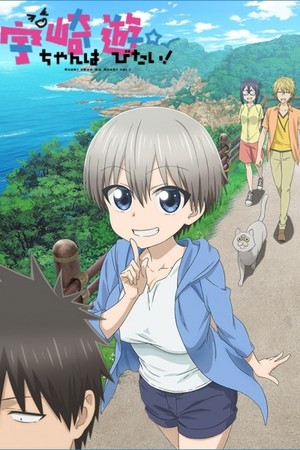
A romantic comedy tagged comedy, ecchi, romance, school, seinen and slice of life. Shinichi Sakurai, a quiet college student, is pestered by his cheerful and teasing underclassman Hana Uzaki, who is also at university. AniList lists them at 20 and 19, and a fan wiki gives the same ages (sources vary slightly, from 19 to 20 for Hana). The ecchi side is the teasing and a few awkward situations, played for laughs. Good for: light comedy with a slow-burn romance. Catch: Hana's teasing is relentless, and some viewers find it grating.
A Thirty-Year Old's Health and Physical Education (2011, 12 episodes)
A parody and romantic comedy based on a guidebook aimed at men in their thirties who have not had a romance. The two leads, Hayao Imagawa and Natsu Andou, are both 30. A comic matchmaking premise carries the show, and the humor is awkward and sex-themed. Good for: viewers who want an adult cast and a comedy about adulthood. Catch: it is a niche, low-budget series and the humor is dated.
That is a short list on purpose. We would rather show two titles we can stand behind than fill a ranking with series whose cast ages we cannot verify. For other adult-oriented anime with a different mood, see seinen anime to watch next.
Questions people ask
What does ecchi mean in anime?
It means suggestive, playfully sexual content: teasing, innuendo, revealing outfits and awkward situations that stop short of explicit sex. The word is Japanese slang from the letter "H."
Is ecchi the same as hentai?
No. In English usage, hentai means pornographic anime and manga. Ecchi is the softer category, without explicit depictions. In Japan the two words are closer to each other in feel, which is why the line can seem blurry to fans.
Is ecchi anime explicit?
Not by the standard definition. It may contain nudity, often censored on broadcast, and frequent suggestive scenes, but it is not made as pornography.
What is R+ anime?
On MyAnimeList, R+ means mild nudity (and possibly violence and profanity). It is a step above R and below Rx, which is the hentai category.
Is ecchi a genre?
It is used as a genre tag on catalogue sites, but it is really a tone that layers onto comedy, action, fantasy or romance.
What is the difference between ecchi and fan service?
Fan service is any extra content meant to please the audience, often sexual. Ecchi is the label for works where suggestive content is a regular feature.
Sources
- Wikipedia, "Ecchi" (etymology, usage): en.wikipedia.org/wiki/Ecchi
- Wikipedia, "Hentai" (literal meaning and English definition): en.wikipedia.org/wiki/Hentai
- Wikipedia, "Fan service" (definition and origin): en.wikipedia.org/wiki/Fan_service
- Dictionary.com, "ecchi" (definition and origin): dictionary.com/browse/ecchi
- MyAnimeList, "Ratings explanation": myanimelist.net/info.php?go=mpaa
- AniList, character ages for Uzaki-chan Wants to Hang Out! and 30-sai no Hoken Taiiku: anilist.co
- Uzaki-chan Wants to Hang Out! Wiki (Fandom), Chapter 1: uzaki-chan.fandom.com/wiki/Chapter_1
- Wikipedia, "30-sai no Hoken Taiiku": en.wikipedia.org/wiki/30-sai_no_Hoken_Taiiku
- DataForSEO clickstream (US search demographics), pulled 3 November 2026
Last checked: 4 November 2026