The best mecha anime to start with are Mobile Suit Gundam (the original real robot series), Neon Genesis Evangelion, Gurren Lagann, Code Geass and Full Metal Panic!. Mecha anime splits into two families: super robot shows (huge, heroic, often supernatural machines) and real robot shows (mass-produced machines in believable wars). This list gives 14 picks across both, with content notes.
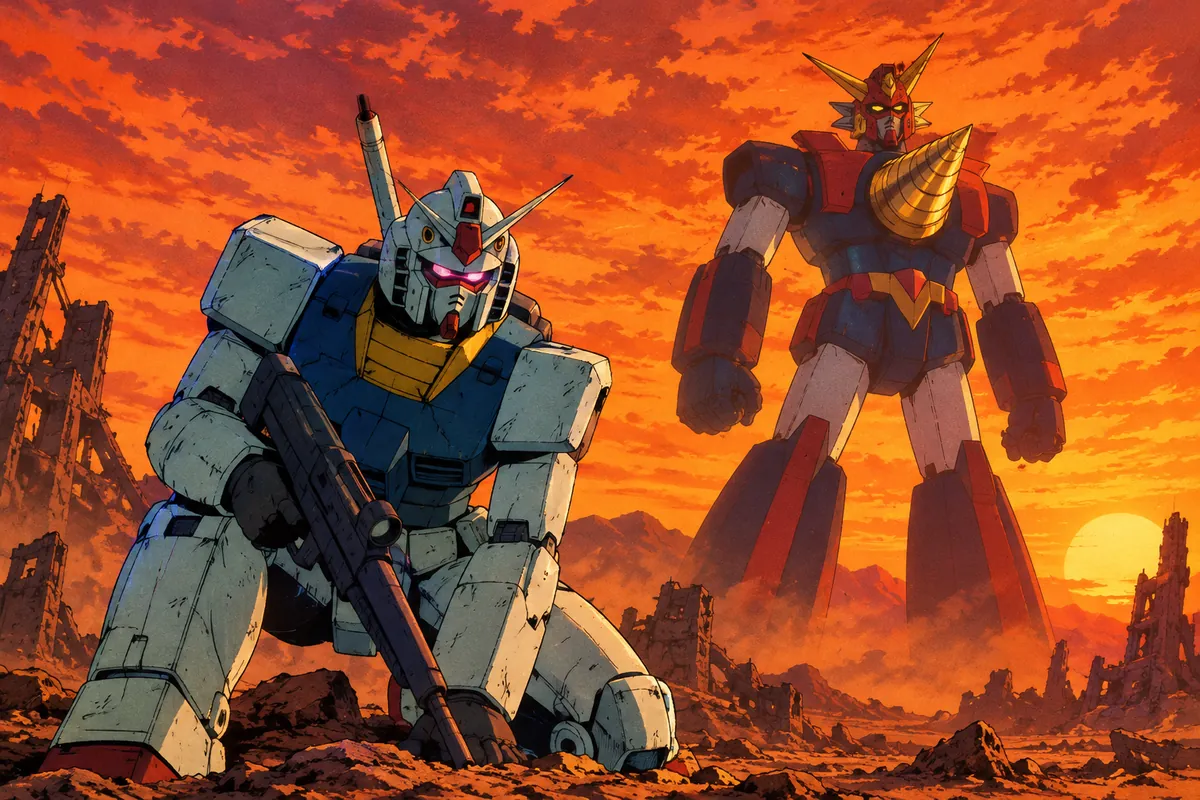
Image: Fan art (AI-generated)
Last checked: 5 November 2026. Where to watch changes often and by country, so availability varies by region: check your local services before you plan a marathon. Browse the full mecha category for more titles.
Super robot vs real robot: the one idea that helps you choose
Almost every mecha fan sorts shows into two groups. Super robot series feature one-of-a-kind giant machines with superhero-style powers, often piloted by teenagers. Real robot series treat robots as military equipment: mass-produced, limited by technology, used in wars, with more complicated characters. Wikipedia credits Mazinger Z (1972) with the first giant robot flown from a cockpit, and says Mobile Suit Gundam (1979) is widely considered the first real robot series.
If you want big emotion and spectacle, start in the super robot group. If you want politics, war and grounded drama, start in the real robot group. Many of the best shows mix both, and we mark those as hybrids.
Quick comparison
| Title | Year | Episodes | Type | Good for |
|---|---|---|---|---|
| Mazinger Z | 1972 | 92 | Super robot | History fans |
| Mobile Suit Gundam | 1979 | 43 | Real robot | War drama |
| Super Dimension Fortress Macross | 1982 | TV series | Real robot hybrid | Music and romance |
| Patlabor: The TV Series | 1989 | 47 | Real robot | Slice of life, police |
| Gundam: The 08th MS Team | 1996 | 12 | Real robot | A short, grounded entry |
| Neon Genesis Evangelion | 1995 | 26 | Hybrid | Psychological drama |
| The Big O | 1999 | Two seasons | Super robot noir | Style and mystery |
| Full Metal Panic! | 2002 | 24 | Real robot | Action and comedy |
| Eureka Seven | 2005 | 50 | Hybrid | Coming of age |
| Code Geass | 2006 | 25 + 25 | Real robot hybrid | Strategy thriller |
| Gurren Lagann | 2007 | 27 | Super robot | High energy |
| Macross Frontier | 2008 | 25 | Real robot hybrid | Modern Macross |
| Gundam: Iron-Blooded Orphans | 2015 | Two seasons | Real robot | Gritty war |
| Gundam: The Witch from Mercury | 2022 | 24 | Real robot | Newer viewers |
Super robot picks
1. Gurren Lagann (2007, 27 episodes)
Two young men dig out of an underground village and end up fighting for the whole universe. Gurren Lagann is the loudest, most hopeful pick here, directed by Hiroyuki Imaishi at Gainax. It gets bigger every few episodes and never apologizes for it. Content notes: violence and some dark turns, but not graphic. See our Gurren Lagann watch order for the films.
2. Mazinger Z (1972, 92 episodes)
Mazinger Z is where the piloted giant robot began, so it matters as history. It is episodic, old-fashioned and aimed at children, so treat it as a classic to sample rather than a binge. Content notes: cartoon violence.
3. The Big O (1999, two seasons)
A city where nobody remembers the past, a negotiator in a black suit and a giant machine he calls only when needed. The Big O is closer to noir than to typical robot action, written under head writer Chiaki J. Konaka. Pick it if you like mystery and atmosphere over constant fights.
Real robot picks
4. Mobile Suit Gundam (1979, 43 episodes)
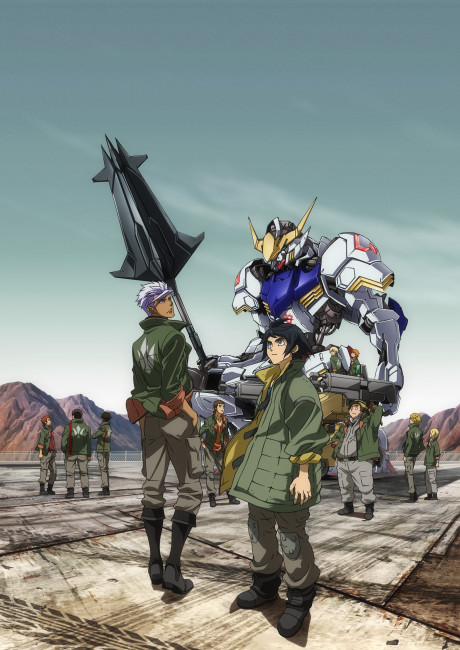
A teenage pilot is pulled into a war between the Earth Federation and the Principality of Zeon. The original Gundam is slower and rougher than modern shows, but it set the template. Content notes: war deaths and a serious tone. Start with our Gundam watch order if the franchise looks confusing.
5. Mobile Suit Gundam: The 08th MS Team (1996, 12 episodes)
A ground-level story from the same war, told in 12 OVA episodes. The 08th MS Team is a good first Gundam if you want a short, self-contained war story. Content notes: war violence, a romance between enemy soldiers.
6. Patlabor: The TV Series (1989, 47 episodes)
Labor robots are work machines, and the police unit that handles them spends as much time on paperwork as on crime. Patlabor was created by the Headgear collective as a more realistic, lighter alternative to militarized shows like Gundam. For a darker, more political take, try Patlabor 2: The Movie.
7. Full Metal Panic! (2002, 24 episodes)
A covert soldier is sent to guard a high school girl. Full Metal Panic! switches between school comedy and serious military action, and it works best if you accept both. Content notes: gun violence, some fan service jokes. See the Full Metal Panic watch order for the sequels.
8. Gundam: Iron-Blooded Orphans (2015, two seasons)
Child soldiers on the edge of society fight to survive. Iron-Blooded Orphans is one of the grittier modern Gundam shows. Wikipedia lists Tatsuyuki Nagai as director and Mari Okada as writer. Content notes: frequent violence and death, including young characters.
9. Gundam: The Witch from Mercury (2022, 24 episodes)
Set in a school, The Witch from Mercury aired in two 12-episode parts (October 2022 to July 2023) and is a good Gundam entry for newcomers, because you do not need to know the older shows. Content notes: violence, with a heavier tone than the school setting suggests.
Hybrids and genre benders
10. Neon Genesis Evangelion (1995, 26 episodes)
A boy is told to pilot a biomechanical machine against monsters called Angels. Evangelion is about the pilots' minds as much as the fights, and it is the most discussed title here. Content notes: depression, trauma and a deliberately uncomfortable tone. Read the Evangelion watch order before the films.
11. Code Geass: Lelouch of the Rebellion (2006, 25 + 25 episodes)
An exiled prince with a mind-control power leads a rebellion using mecha called Knightmares. Code Geass is a strategy thriller first and a robot show second, followed by the R2 season. See our Code Geass watch order. Content notes: war crimes, civilian deaths, dark themes.
12. Eureka Seven (2005, 50 episodes)
A bored teenager meets a mysterious pilot and joins an outlaw crew. Eureka Seven is a long coming-of-age story with air-surfing robots. The first stretch is slow, and the show pays that back later.
13. Super Dimension Fortress Macross (1982)
Macross mixes transforming fighters, a love triangle and pop music against a human-alien war. Per Wikipedia it aired from October 1982 to June 1983, and it helped shape what fans later called real robot anime. Our Macross watch order explains the many sequels.
14. Macross Frontier (2008, 25 episodes)
The easiest way into the franchise today. Macross Frontier aired on MBS from April to September 2008, and it repeats the original's mix of battles, music and romance with modern animation. Content notes: some fan service.
Where to start, by taste
- You want emotion and spectacle: Gurren Lagann.
- You want a smart thriller: Code Geass.
- You want grounded war: Gundam (the 08th MS Team for a short start).
- You want something strange and psychological: Evangelion.
- You want something light with real action: Full Metal Panic!.
Not on this list but worth knowing: Armored Trooper Votoms (1983, 52 episodes) and the 2021 series 86 Eighty-Six, both real robot favorites with pages in our catalogue.
Questions people ask
What is mecha anime?
Mecha anime features giant robots or mechanical suits, usually piloted by people, in battle. It is split into super robot and real robot styles.
What is the difference between super robot and real robot?
Super robots are rare, powerful, almost superhero machines. Real robots are mass-produced military machines governed by realistic limits.
What is the best mecha anime for beginners?
Gurren Lagann for spectacle, Code Geass for story, or The Witch from Mercury if you want a recent Gundam that needs no background.
Do I need to watch Gundam in order?
No. Most Gundam series are separate stories. Our Gundam watch order guide shows the main timelines.
Is Evangelion a mecha anime?
Yes, it has giant machines and monster fights, but it is better known for its psychological drama.
Are these safe for teens?
Not all. Evangelion, Code Geass and Iron-Blooded Orphans contain heavy violence and dark themes, so check the content notes above.
Sources
- Wikipedia, "Mecha anime and manga" (super robot and real robot definitions), link. Checked 5 November 2026.
- Wikipedia, "Mobile Suit Gundam" (premiere 7 April 1979, 43 episodes), link.
- Wikipedia, "Mazinger Z" (serialized from October 1972), link.
- Wikipedia, "Super Dimension Fortress Macross" (aired October 1982 to June 1983), link.
- Wikipedia, "Mobile Police Patlabor" (Headgear and the realistic concept), link.
- Wikipedia, "Mobile Suit Gundam: The 08th MS Team" (12 episodes, 1996), link.
- Wikipedia, "Neon Genesis Evangelion" (October 1995 to March 1996), link.
- Wikipedia, "Eureka Seven" (50 episodes, 2005 to 2006), link.
- Wikipedia, "The Big O" (Sunrise, Chiaki J. Konaka), link.
- Wikipedia, "Tengen Toppa Gurren Lagann" (27 episodes, April to September 2007), link.
- Wikipedia, "Code Geass" (Sunrise, Goro Taniguchi), link.
- Wikipedia, "Mobile Suit Gundam: Iron-Blooded Orphans" (2015), link.
- Wikipedia, "Mobile Suit Gundam: The Witch from Mercury" (October 2022 to July 2023), link.
- Wikipedia, "Macross Frontier" (4 April to 26 September 2008), link.
- Kitsu anime database, episode counts for the titles above, link. Checked 5 November 2026.